Barndominium Site Preparation in Wisconsin
Site preparation is everything that happens to raw Wisconsin land before the foundation: learning what the soil will take, clearing, the driveway and culvert, grading and drainage, keeping soil on the site, and a firm, well-drained pad for the building. On rural land it is the least predictable part of the budget and the part that most often decides the schedule. In Wisconsin no on-site construction for a new home, not even excavation for the foundation, may begin until the Wisconsin uniform building permit is issued (SPS 320.08), so site work is scheduled around the permit.
Site Preparation: how the work runs
Four stages, in this order. The sequence matters more than it looks: settling who enforces the dwelling code on your parcel, the zoning and the septic answer before anything is fabricated is what keeps a Wisconsin build from stalling into the frost season.
Soil, water and the septic site
On land without sewer, a State-certified soil tester evaluates the site for the septic system, and the county issues the sanitary permit, or in Milwaukee County the city, village or town (Wis. Stat. 145.01). That permit comes before the building permit (SPS 383.25), and where the system can go often decides where the house can go. Where a well is needed, it is drilled by a DNR-licensed well driller to the State well code, NR 812, which also governs where it may sit relative to the septic system.
Clearing, access and the driveway
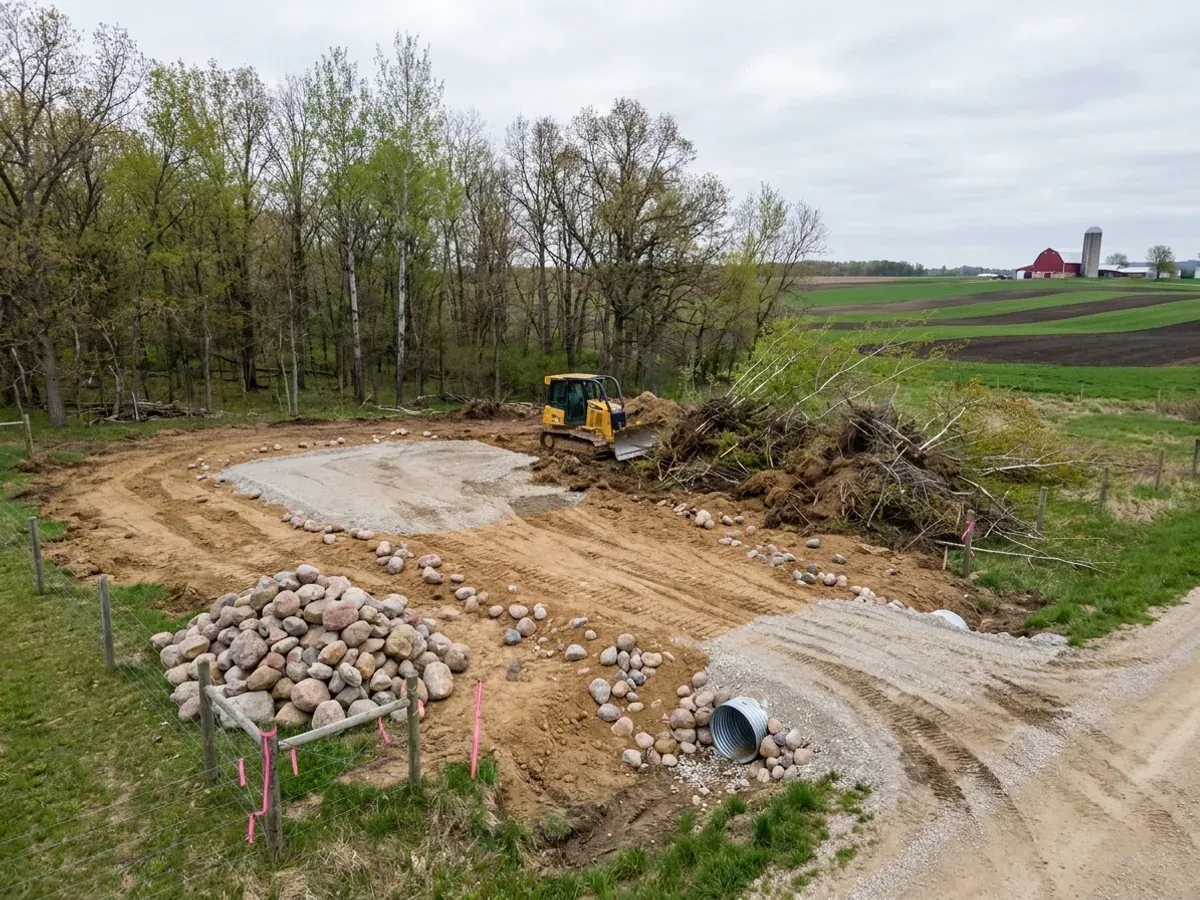
Trees are cleared from the building site, the septic area and the driveway line, and the driveway is built to carry concrete and delivery trucks. Work in a road right-of-way, a driveway entrance or a culvert, needs a permit from the road's highway authority, whether town, county or State (Wis. Stat. 86.07), and its standards are local, so that permit comes before the driveway goes in.
Grading, drainage and erosion control
The Uniform Dwelling Code's erosion control rules apply to a new home's site (SPS 321.125), and erosion control is inspected along with every other dwelling code inspection (SPS 320.10); a site disturbing an acre or more comes under the DNR instead. Silt fence and other controls go in before the ground is opened, and the pad is graded so water runs away from the building on every side.
Building pad ready for frost-protected footings
Topsoil and organic material come off the building area, and fill, where needed, goes in compacted in lifts. Footings for a Wisconsin home go at least 48 inches below adjacent grade, or below the frost line if that is deeper (SPS 321.16), and frozen ground is never left under them. The pad is handed to the foundation crew level, compacted and dry.
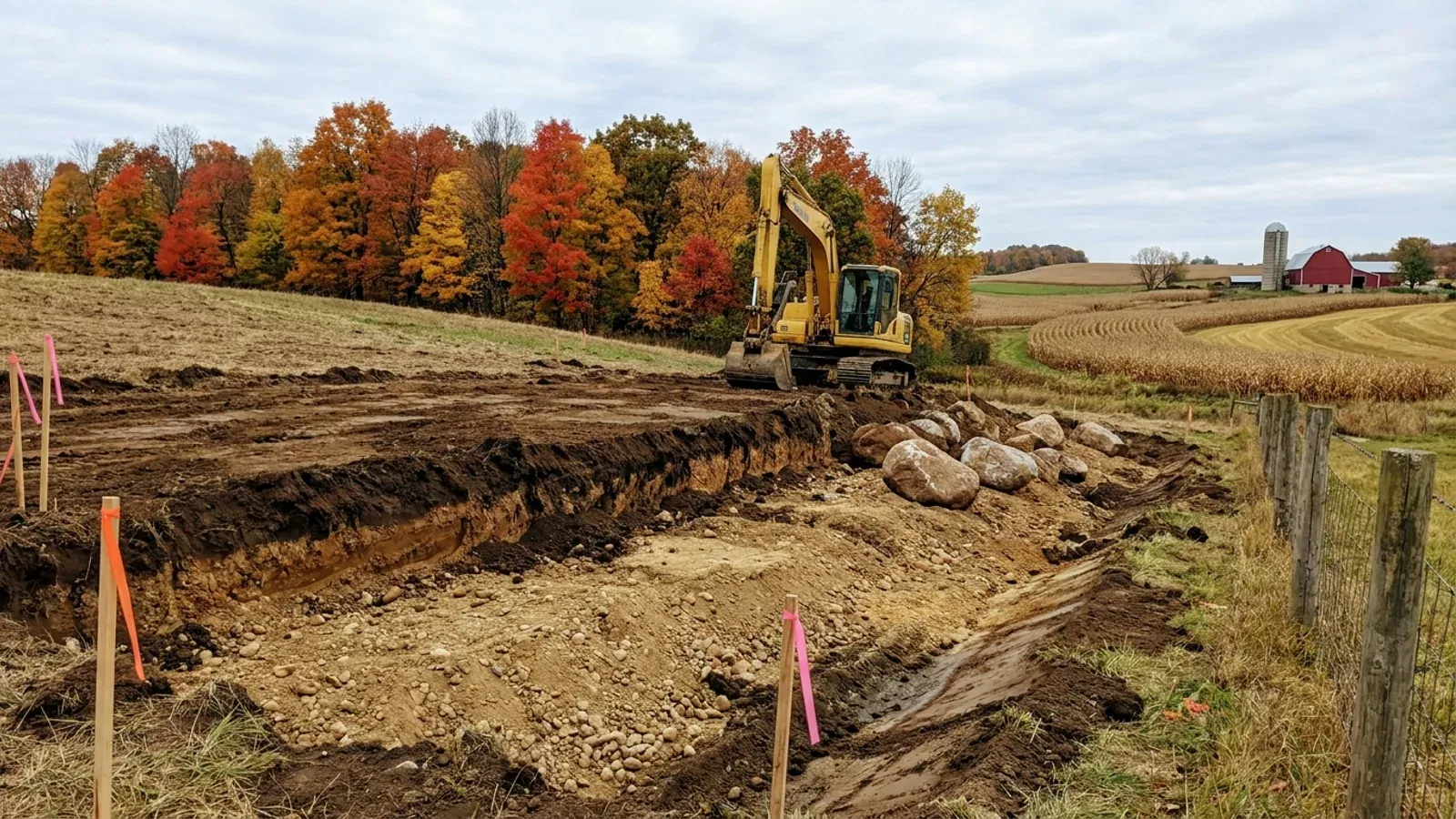
Wisconsin land varies more than a flat kit drawing suggests
A cleared field in the Fox Valley, a wooded lot up north with stumps, rock and a long drive in from a town road, and a Driftless ridgetop with steep slopes on three sides are three different site budgets for the same building. Lake and river lots add shoreland zoning, and low ground can bring floodplain zoning, which every county, city and village must have (Wis. Stat. 87.30). We walk the land before we price the site work, because this is where rural budgets are won or lost.
Where we deliver site preparation
In Wisconsin the building code does not change at a municipal line, but almost everything around it does. Land is governed by a city, a village or a town, and each can enforce the Uniform Dwelling Code itself or by contract; where one has no ordinance of its own, the county's applies, and in some small municipalities a state-contracted agency does the inspections. Cross one of those lines and what changes is who reviews the drawings and inspects the work, how the land is zoned, and what the permit costs. The roof snow zone changes too, between the northern and southern halves of the state.
Barndominium builders across Wisconsin.
Every city and county we build in has its own answer on who issues the permit, how the land is zoned and how septic is handled. The service area pages set out what each one publishes.
What actually decides the price
Square footage is the number everyone leads with, and it is rarely the one that moves a barndominium budget. These four do.
-
Clearing and stumps
Wooded land costs more to clear than open land, and stumps, rock and brush piles have to go somewhere. The septic area and the driveway line often need clearing too, not just the building pad.
-
Driveway length and culverts
A long gravel drive built to carry concrete trucks, with a culvert at the road ditch and more where it crosses low ground, can cost more than the pad itself.
-
Soil and fill
Heavy clay, high groundwater or organic soils may need removal and engineered fill under the building. Sandy soils drain well but need compaction. What is under the topsoil is found before the budget is fixed.
-
Slope
A sloping site means cut and fill, retaining walls or a walkout foundation. Driftless hills make striking building sites and more expensive ones.
Site Preparation in Wisconsin: common questions
8 questions we get asked most often about building in Wisconsin. If yours is not on the list, ask it directly.
What does site preparation include?
Why does the septic soil evaluation come first?
Can site work start before the building permit?
Can you prepare a site in winter?
What if my land is on a lake or river?
What about low or wet ground?
Do I need a permit for a driveway?
How much does site preparation cost?
Sources
- Wis. Admin. Code SPS 320.08, Wisconsin uniform building permit — Wisconsin Legislature
- Wis. Admin. Code SPS 383.25, POWTS sanitary permits — Wisconsin Legislature
- Wis. Admin. Code SPS 321.125, erosion control and sediment control — Wisconsin Legislature
- Wis. Admin. Code NR 812.01, well construction and pump installation code — Wisconsin Legislature
- Wis. Stat. 86.07, highway right-of-way permits — Wisconsin Legislature
- Wis. Stat. 87.30, floodplain zoning — Wisconsin Legislature
- Wis. Stat. 59.692, county shoreland zoning — Wisconsin Legislature
Keep reading
The pages that answer the next question this one raises.
Ready to put site preparation against a real plan? Start there and the rest follows.
Tell us about the land
Tell us where the parcel is and what you want on it, and we will come back with who has jurisdiction, what the land needs before it can be built on, and a realistic budget range. Starting the survey costs nothing.