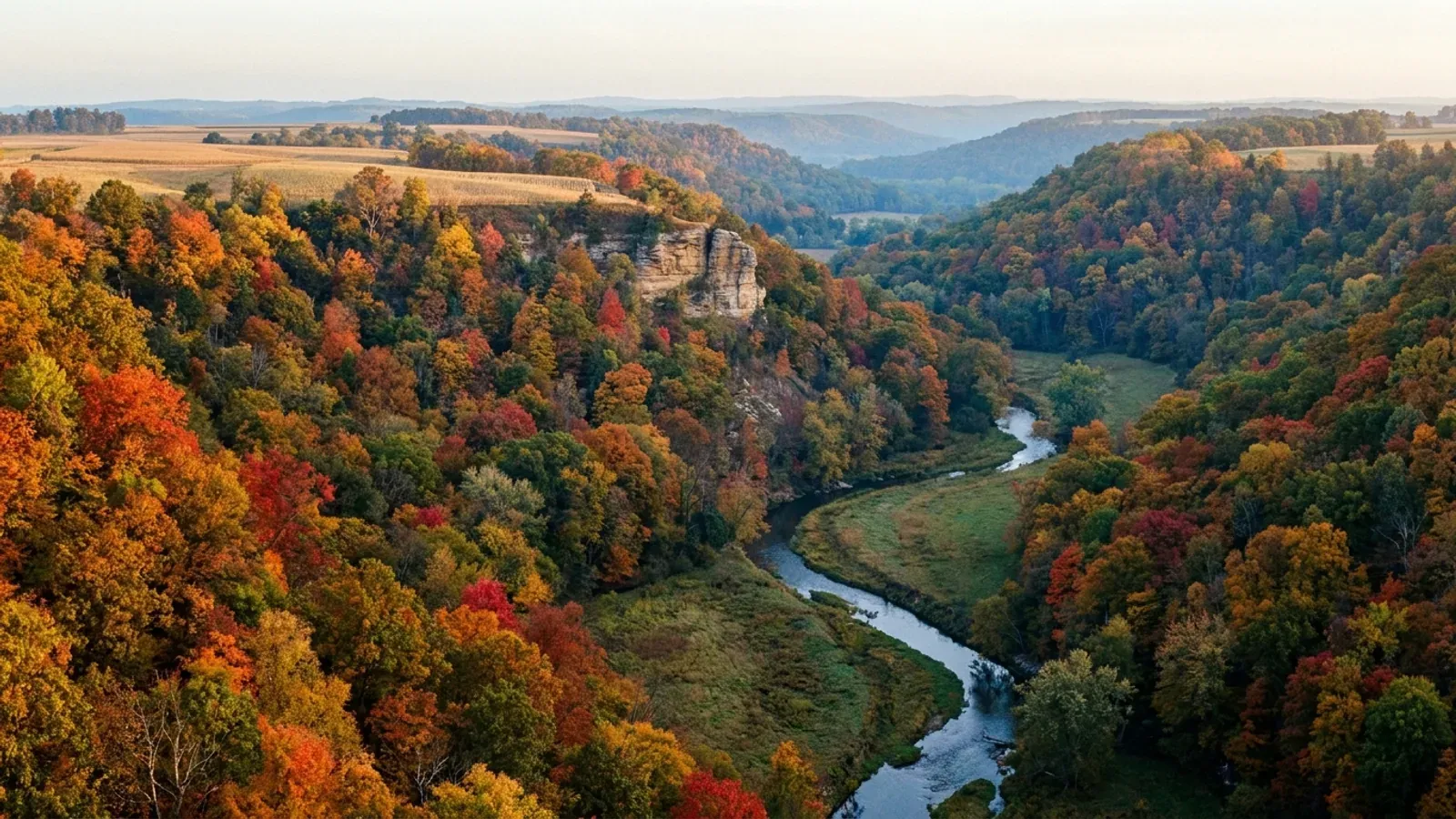
Barndominium Builders in La Crosse County, Wisconsin
Most barndominium projects in La Crosse County, Wisconsin sit on town land: ridge-top acreage above the coulees, valley parcels along the creeks, and farm ground being split off for a house and a shop. We build steel-framed and post-frame barndominiums across the county, from fully finished homes to barndominium kits for owners who plan to do part of the work themselves. The most common requests out here are a shouse with a big equipment bay beside the living quarters, pole barn homes on a few acres, and metal building homes with a wide clear-span shop. Permits on town land come from two directions. La Crosse County's zoning office issues the zoning and shoreland permits in most towns, and the town issues the building permit for the house, usually through the inspector it contracts with. A parcel without sewer also needs a county sanitary permit before the septic goes in. Barndominium contractors who have worked through that sequence know to line up the soil test, the zoning permit and the town permit in the right order. Tell us about your land and start the survey; we will come back with how the build would run on that parcel and which offices it will go through.
La Crosse County at a glance
- County
- La Crosse County
- Building permit
- Town building inspection
- Local facts on this page
- 6, each linked to its source
Before you build in La Crosse County
The local answers that shape a build here, each taken from the office or document that publishes it. Rules change, so we confirm them again against your parcel before drawing.
The town's building inspector (often a contracted inspection firm), after the La Crosse County zoning permit
On town land the town issues the building permit for a new house, commonly through a contracted inspector; the Town of Holland, for example, uses General Engineering Company and asks for the county zoning permit first. La Crosse County itself issues the zoning, floodplain and shoreland permits. The City of La Crosse, the City of Onalaska and the county's villages run their own permits.
Source: Building Permits, Town of Holland (townofhollandwi.gov)
- County zoning reach
- La Crosse County administers its zoning ordinance in the towns except Campbell and Burns, and administers floodplain and shoreland rules across all town land. It has no zoning authority in the City of La Crosse, the City of Onalaska, or the Villages of Bangor, Holmen and Rockland.
- Zoning Occupancy permit
- La Crosse County requires a Zoning Occupancy permit for new construction, submitted with a site map and construction plans. The county says processing is typically 1 to 2 weeks, that the permit cannot issue until all other applicable permits are in place, and that an address is assigned when the final permit for a principal use is issued.
- Shoreland permit
- La Crosse County requires a Shoreland Permit for development within 300 feet of a navigable river, creek or stream, within 1,000 feet of a navigable lake, in a floodplain or in a wetland. More than one residence on a parcel is allowed only in the Residential C district; elsewhere it takes a conditional use permit.
- A town's new-house permit
- The Town of Holland requires a building permit for residential buildings, using General Engineering Company as its inspector. For a new house it asks for the county zoning permit, a heat-loss or RESCheck calculation, a driveway application if the lot enters a town road, and plans detailed enough to show Uniform Dwelling Code compliance.
- Septic permits
- La Crosse County Health Department issues sanitary permits for new private septic systems. The steps it lists are a soil evaluation by a licensed certified soil tester, a system design by a master plumber, restricted master plumber or certified designer, and an application submitted by that professional.
- County land plans
- La Crosse County's planning division lists an area Bluffland Plan covering the city and its surroundings, and a Farmland Preservation Plan, among its county plans; the farmland preservation program is part of the county's Chapter 17 Zoning Code.
Source: Zoning FAQ, La Crosse County (lacrossecounty.org)
Source: Zoning FAQ, La Crosse County (lacrossecounty.org)
Source: Zoning FAQ, La Crosse County (lacrossecounty.org)
Source: Building Permits, Town of Holland (townofhollandwi.gov)
Source: Private Septic Systems, La Crosse County Health Department (lacrossecounty.org)
Source: Planning and Zoning, La Crosse County (lacrossecounty.org)
Building on land near La Crosse County
Rural parcels in the county tend to be either bluff land or valley land, and each has its own checks. Ridge and hillside lots bring slopes, long driveways and erosion control; the county keeps a bluffland plan, so ask the zoning office what applies before you choose a building site. Valley lots are more likely to fall inside the shoreland reach of a creek or inside the floodplain, both handled by the county. Before you buy, confirm the zoning district (a second residence needs Residential C or a conditional use permit), book a soil test for the septic, and call the town clerk about the building inspector. For the city itself, see the [City of La Crosse page](/areas/la-crosse-wi/).
Where we build in this part of Wisconsin
Eau Claire, La Crosse & Western Wisconsin
- Eau Claire
- La Crosse
- Eau Claire County
- Chippewa County
- La Crosse County
What we build in La Crosse County
Kits, custom plans and pole barn homes. The parcel decides the budget more than the floor area does, so we price against your land rather than a rate card.
Barndominium Kits
Barndominium kits for Wisconsin land: steel or post-frame shell packages sized for your snow zone and frost depth, with a set ready for plan review.
Custom Plans
Custom barndominium floor plans for your Wisconsin parcel: drawn around the lake setback, the septic site, the slope and the plan review ahead.
Pole Barn Homes
Pole barn homes in Wisconsin built as real houses: post-frame posts below frost, trusses sized for your snow zone, and walls built for heating season.
Have land in or near La Crosse County? Tell us about the parcel and what you want to build, and we will check it against the local rules before anything is drawn.
Building in La Crosse County: questions
Start the surveyHow much does it cost to build a barndominium in La Crosse County?
Do I need a building permit for a barndominium in La Crosse County?
Can I put a barndominium kit on rural land in La Crosse County?
Who issues the septic permit for a rural barndominium in La Crosse County?
Keep reading
What usually comes next once you know what La Crosse County allows.
Barndominium Cost Guide
Sourced per-square-foot ranges by tier and size, and what moves the number on your land.
Read itCan You Live in a Pole Barn in Wisconsin?
Zoning, septic and who inspects, before you buy the land.
Read itHow Long Does It Take?
From parcel to move-in, and which steps set the clock.
Read itSources for this page
The published pages behind the La Crosse County facts above. Rules change, so check the current version with the office before you rely on it.
- Building Permits, Town of HollandBuilding permit authority; A town's new-house permittownofhollandwi.gov
- Zoning FAQ, La Crosse CountyCounty zoning reach; Zoning Occupancy permit; Shoreland permitlacrossecounty.org
- Private Septic Systems, La Crosse County Health DepartmentSeptic permitslacrossecounty.org
- Planning and Zoning, La Crosse CountyCounty land planslacrossecounty.org
Barndominium builders near La Crosse County
Nearby places we also build in. Across a city limit, a town line or a county line the permit office, zoning and septic rules can change, so each has its own page.
Building in La Crosse County?
Start with the survey. Tell us where the land is and what you want on it, and we will come back with which office permits it, what it will allow, and a plan to fit.